Showing posts with label Timex. Show all posts

Monday, June 9, 2014

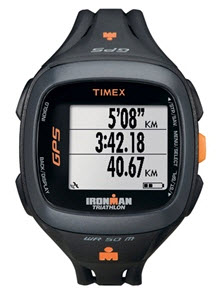
TIMEX Ironman Easy Trainer GPS Giveaway!

RunnerDude has partnered with TIMEX to bring you this awesome giveaway! Follow the directions below to enter for a chance to win one of two TIMEX Ironman Easy Trainer GPS watches. One male and one female winner will be selected at random by Rafflecopter. The winners will be announced on the blog on June 17th, 2014. Good Luck!

After registering, be sure to check out my interviews with TIMEX Multisport Team Members Susanne Davis and Meredith Dolhare.


a Rafflecopter giveaway

Thursday, June 5, 2014

RunnerDude Chats With TIMEX Multisport Team Member Susanne Davis


Recently I had the privilege to interview Timex Multisport Team member Susanne Davis. Susanne is a decorated athlete who has set course records and won many Sprint Distance Triathlons.  As a Professional Triathlete in the 1990s, she travelled the world racing ITU World Cups and competed in the 2000 US Olympic Triathlon Trials.  In October 2010, in only her second Ironman, she turned Kona upside down by breaking the existing 35-39 Age Group World Record and placing 2nd Overall Amateur at the 2010 Ironman World Championships.  She was the 1st American Woman and placed 23rd among the Pro Field!  This year in 2013 Susanne put in one of the greatest races of her life.  She is now an American record holder being the fastest  Amateur over 40 in the 35 year history of the Ironman World Championship going 9:41:40.   She is also the reigning 2013 USA Triathlon Masters Champion at Olympic Distance.  She finished the year as the number one ranked Master’s triathlete in the country. In 2011 during her first year on Timex Multisport Team, one of the country’s most successful triathlon teams, Susanne was voted Rookie of the Year. 

Read on to learn more about this amazing athlete....

RD: Tell us a little about your youth. Were you athletic as a child? Did you grow up in an athletic family?
Susanne: I grew up running track and cross country in High school and College at University of Wisconsin LaCrosse.  I am the youngest of 6 kids and my sister Beth who is closest in age to me (5yrs older) was my biggest influence.  I went to her meets and loved the camaraderie and team spirit.  Her coaches would always come up to me and say, "I hope you are a runner because you've got those long, lean, fast "Martineau legs"." That invitation and wanting to be as good or (actually better) than my sister was my motivation.  I always was competing to keep up with her growing up. Water skiing, down hill skiing, mountain biking, running, swimming faster across the lake each year camping etc. It makes me laugh and wonder if my daughter who is 5 years younger than my son if this will play out in her life.  Her personality is a lot like me.

RD: When did you first realize that the triathlon and more specifically the Ironman was your niche?
Susanne: I did my first triathlon in summer of 1993.  I was almost last out of the water, road past half the field on a borrowed bicycle and ran very strong passing tons of people to the finish!  I had no idea but at the awards ceremony they announced me as the winner and gave me a check for $100.00!  I was shocked and elated. This is where my dream started and ironically the motto of Ironman, "Anything is Possible".   I thought, wow I can make money at this?  I won this triathlon on my first attempt!  I think I could be one of the best anywhere! Being 22 years old and a bit naive has it's advantages.   Here I was from a town of 12,000 people where I beat 150 of them.  It didn't dawn on me that the world has 7 billion people.  I read in Triathlete Magazine that the best athletes trained in Boulder so I moved there for the summer to become one of the best triathletes!  I took 30 minutes off my next triathlon and in my senior year of college I won almost every NCAA cross country race.  It was from the strength and speed I earned simply from doing triathlon for 3 months. I was convinced triathlon was something I should pursue.  I became the top Triathlete in the state of Arizona and was invited to live and train at the Olympic Training Center as a resident athlete training for the first Olympic Games in Sydney, Australia in 2000.  My swim wasn't strong enough to make it out of the water in the lead pack and with drafting on the bike it made it impossible for me to catch up and finish 1st or 2nd which is how you qualified.  I was burned out and took a 3 year break from triathlon.  I went back to running and balanced it around a sales rep job.

RD: How does being a triathlon competitor in the 90s compare to being an Ironman competitor in 2014?Susanne: Ironman didn't become my niche until I had children.  I gained 50 lbs with my first son and worked as a Sales Rep traveling on the West coast for 60 hours a week.  I cried everyday I had to leave my son to drive to LA.  I quit and a neighbor/CEO asked me to coach him for an Ironman.  He didn't know how to swim, never biked and hadn't run since college.  I trained with him and lost the weight.  I decided to try a half ironman, qualified for Kona and placed 11th amateur overall and 3rd in my AG 30-34.  Not until 5 years later after having my second child did I realize Ironman would be my niche!  I grew my coaching business and trained with many of my clients.  It was the perfect environment to light the Kona fire in me again.  I was 3rd overall with the pros in my qualifying race at Honu!   At Kona, I was the top American amateur in the World Championships and 2nd Overall Amateur.  I had beat my existing age group World Record and taken 30 minutes off my previous Kona time finishing in 9:51!  What!?  It was then in 2010, 17 years after my first triathlon that I thought I found my niche.  God gave me a taste of success and I believed I could get faster and become the best in the World.  

RD: What was your toughest race? What made it so tough?
Susanne: Last year at the Ironman World Championships. 
I was on fire from the start swimming 90 seconds faster than my previous years, biked 11 minutes faster and was stoked going into the run which is my strongest leg of a triathlon.  But, at mile 2 my pace slowed from 7:15 to almost 9 minutes as my hips and glutes were locked and not firing.  No uphill to blame. I thought OK, my body will be OK it just needs another mile to stretch out from the ride, but every step hurt. My husband screamed, "Banana (Susanna banana) nick name) you are going to CRUSH the world record! For the past two years I've run 3:17 or 3:18 off the bike.  I yelled back, " I'll be lucky if I break 3:45 today". It's going to take all I've got.  I chanted the names of people I loved and who supported me and sang songs of faith, "He can move the mountains, my God is mighty to save... Please lord move this mountain of pain and slow running.  Then at the Energy lab, "Eye of the Tiger came blasting through the only speaker on course. Rising up back on my feet.  I pumped my fist in the air, yelled out let's get this party started and boom - I took the pace back down to 7:30 pace!  

RD: What's a typical training week look like for you?
Susanne: Monday my alarm goes off at 4:20am.  I make a double shot cappuccino and teach YMCA 90 minute spin class at 5:15am.  I run home, make breakfast, pack lunches and at 8am I drop my kids at school.  I go for a run and start coaching athletes or write programs on Training Peaks all day until I pick my kids up from school at 2:20pm.  I make a snack, do homework, make dinner, read with them, go to bed and start again! 
  • Tuesday I have an off day and coach people and catch up on daily house or mom duties.  I also teach math as a volunteer in my daughters class.
  • Wednesday is my mid-week long ride with a run after it.
  • Thurs is speed day. I do a speed set running in the morning, coach personal sessions and swim Masters over lunch. 
  • Friday I teach another Spin class at 5:15am, then run or swim.
  • Sat: My husband watches the kids and I ride 4 hours and run off the bike.
  • Sunday: is a family day, church and off or a long run.  

I'll squeeze in extra swims throughout the week to make sure I'm swimming 4 times just before Ironman.  
All of my mileage and paces vary throughout the year based on what phase of periodization I'm in.
 
RD: What tools do you use to help elevate your training.
Susanne: I train with a Timex Run Trainer 2.0 Heart Rate and GPS monitor.  I'm a big believer that numbers are important and provide needed guidance in training.  Every workout is written with a specific goal of heart rate and pace.  I maximize my time, effort and benefit from the training at the highest level.  I also use rpms and watts as well to control anaerobic efforts at race pace when teaching spin class as a turbo session weekly.  All these numbers can be pretty important on race day.

RD: You're also an endurance coach. How does the time commitment of training others affect your Ironman training?
Susanne: Certainly the time could get away from you easily and some weeks it's very challenging to balance. I am very good at organizing a calendar.  Many of my clients who I coach are with me for years and they understand the complexity of balancing time with other commitments. I coordinate some long Sat rides with clients who are around the same strength.  It's a benefit to us both.  I do group sessions the last two months leading up to a big Ironman race.  I also limit how many clients I personally work one on one with so I can keep balanced.  I've hired a few amazing assistant coaches who know my philosophy in coaching and are experts as well in different areas of training.  I love my daughter's saying, "mom I'm not an octopus".  I have to remind myself of that when I'm over commit myself.   

RD: Have you ever pictured yourself doing something different with your life?
Susanne: No! I love my life!  I love my family, friends, where I live, my job as a coach and the Timex Team. I feel so blessed to be where I am.

RD: What do you enjoy most about coaching others?
Susanne: I love to share my knowledge and see the light click, the confidence build and the results improve. The appreciation and accolades I get from my clients goes full circle.  I inspire them and push them to be better and they do that for me.  Qualifying for Boston the Kona Ironman or getting on a podium is a life long journey for some.  Watching them get there and knowing I'm part of the reason is seriously rewarding.  They cheer for me as aggressively as I cheer for them.  Many have become lifetime friends.
  
RD: Looking back over your athletic career, what would you do differently? 
Susanne: I would have raced Ironman much sooner.  I went 9:51 at the age of 39 in my first real effort to perform there.  If I think back, a young Kate Major (a good friend) had a really successful career with several 3rd place finishes.  She set an amateur world record just 2 minutes faster than my effort back when she was 23.  I've looked at that and thought where could I have been if I started this Ironman journey in my early 20's.  Unfortunately, I thought it was a crazy distance that I wouldn't even be able to handle.  I think I could have been a fairly successful Pro at this distance over the Olympic ITU format.

RD: How did it feel becoming the fastest amateur over 40 in the 35 year history of the Ironman Word Championship with your 9:41:40 finish time?
Susanne: There were so many emotions.  Surprise after my run start.  Incredible satisfaction from the fight of the race.  A thrill that I finally made the top of the podium.  Relief as I'd chased this for the last 4 years.  But mostly it was the sweetest ending to an extremely difficult year for my family. Triathlon has been a great stress reliever in my life through the years. I'm thankful I had it last year.

RD: Are you hoping you hold on to your reign of the USA Triathlon Masters Champion title at the Olympic Distance for a while or would you be okay with someone edging you out?
Susanne: Most races on my calendar I go into with the intention of winning.  There are a few that are tune up races where I know I'm not in top form.  This race is in Milwaukee and I'm surrounded by family so I certainly have a star next to it on my calendar.  It's an "A" race for me and I will prepare myself (as I'm my own coach) to win again.  I'm OK if someone edges me out on the day.  I can control my preparation, but I can't control the day.  You never know what is going to happen to your body or equipment on any given day.  I do know that I will be fast and ready and I have a program that got me there last year.

RD: How does competing at the masters level differ than when you were younger? What do you know now as a masters competitor that you wish you had known when competing in your 20s? 
Susanne: My confidence as a master's is what I didn't have racing as a Pro in my 20's.  Then, you were only as good as your last race.  If you didn't win money you didn't get to travel to the next competition and I was afraid I'd lose my sponsorships and disappoint many people in my life.  Now I'm a mom, wife and coach.  I also happen to be the top Master's triathlete in the world.  Figuring out how to find this balance is so rewarding and if I don't win, I still feel the other rewarding parts of my life.  My family still loves me if I'm 1st or 15th.  It's always a win-win now.

RD: What do you think about younger and younger kids (teens and pre-teens) competing in ultra-type endurance competitions? 
Susanne: Great question.  I've coached elite Jr. High and High School runners and I've seen the difference between coaching philosophies and the other athletes on their team.  The old adage of everything needs to be done in moderation couldn't be more true at a younger age.  If a parent has a teenager with the passion to run a half marathon or a marathon then they should investigate coaches.  Find a coach who can build them up gradually and help them cross train or do the right core strength to avoid over use injury and burn out.  I've seen both sides of the coin.  Athletes who were burned out, injured and didn't run again after high school. I've also seen my clients go on to have full ride scholarships and shine in college.  

A child's desire to be great is something you can't teach but comes from within.  It's how you stoke that fire that makes the difference.

RD: What are your future aspirations? 
Susanne: I feel like I've achieved everything I've wanted to achieve in the sport.  That's not to sound conceited but I am satisfied with what I've done.  The fire is still there and I will compete like I always have but do I have to be the top amateur or top 20 pro or set a world record in the 45 age group?  For now, no. But ask me in a year.

My focus now that I've reached the top is to share my knowledge and passion with more people.  I will be growing my training business to help make a difference in more people's athletic life.  I will continuing being a role model for my kids, clients, people over 40 and moms who want to achieve something great for themselves.  Racing a marathon, a triathlon or cutting time off your next race is doable at any age.  If you need help, find a coach like me. Some people think they can't achieve their dream or are overwhelmed.  I say dream, plan and believe anything is possible. I know, because I just proved it. 

Be sure to checkout Susanne's website  www.tricoachdavis.com.

TIMEX Giveaway!
Stay Tuned! In honor of Susanne's great accomplishments, RunnerDude has partnered with TIMEX to giveaway two TIMEX Ironman Easy Trainer GPS watches! Look for more on the giveaway and how to enter for a chance to win one of two GPS watches this Monday!


Tuesday, August 13, 2013

RunnerDude's Gear Review: The TIMEX Run Trainer 2.0

Many moons ago, while at the beach, I found a TIMEX Ironman sports watch that washed ashore. The band was ratty, but the watch looked good. It was still working, so I bought a new band and wore that foundling for several years. I was hooked on TIMEX. Ever since, I've had many different Ironman watches. I usually wear them until I lose them not because of technical difficulties. So, a few years back I was very excited when I saw a print ad for a new TIMEX GPS watch. I wondered when TIMEX was going to get into the GPS watch business. Seemed like such a natural fit.

TIMEX's first venture into the world of GPS produced a rather large and hard to use watch--the TIMEX Global Trainer. The next model that came out was the TIMEX Ironman Run Trainer  1.0. This version was much smaller and sleeker than the Global Trainer, but very difficult to use (at least for this runner). I found myself often very frustrated with it. I had a hard time getting the satellite signal quickly and really difficult time scrolling from screen to screen.

Because I'm such a loyal TIMEX user, I was excited to see that TIMEX updated the TIMEX Ironman Run Trainer to a 2.0 version. The old saying, "Three times the charm" held true. This version is not much bigger than a regular watch and is very much "out-of-the-box" ready to use.


My test for a GPS is....how quickly can I figure out how to get the GPS signal, pace, and distance, and can I do it without having to dig into a manual. I figure for all the other bells and whistles, I'll need to do a little reading, but for the basics (to me anyway) I feel like it should be "in-your-face" simple. This time TIMEX got it dead on!

I love the large display (I'm 48, so if you're getting close to this age you'll know why this is nice). As compared to the 1.0 version, the 2.0 has a smaller case size and will fit both men and women. The TIMEX Run Trainer 2.0 GPS has a new menu-based system, which makes is much easier to navigate the various features. The 2.0 also has vibrating alerts, which is cool because you can still get your alerts while listening to music. The 2.0 is a little lighter than the 1.0 version too. It also has interval timers based on time or distance. Like the 1.0 version it's still water resistant to 50M and is approved for swim.

The 2.0 also includes:
* real-time distance, pace, speed, heart rate, etc.
* quick signal with SiRFstarIV technology
* 15-workout memory with dated summary
* free access to online training log
* desktop device agent allowing for easy changes to watch and performance settings
* 100-lap chrono with customizable 2- or 3-line display
* hands-free chrono operation based on distance and time
* pace, speed, and distance vibrating/audible alerts
* hydration and nutrition alerts
* interval timer with segments based on time or distance
* customizable alarm with backup
* rechargeable LI-Ion batter with 8-hour life if full GPS mode
* compatible with ANT+ sensors for heart rate and foot pod data
* INDIGLO night-light with NIGHT-MODE feature and Constant-On options.

Retails for $225 ($275 w/heart rate monitor)

So, if you're looking for a great easy-to-use GPS from a dependable company, check out the TIMEX GPS Run Trainer 2.0 GPS. Ultra Marathoner Meredith Dolhare also trains and races with the TIMEX Run Trainer 2.0. Check out her bio here. To see all the TIMEX GPS models click here.

PS: Be on the lookout for a giveway soon!!!!

Notice: While TIMEX provided the featured product for review, they in no way requested a positive review nor did I receive compensation for my reveiw. My review is based on my personal experience with the product. 

Wednesday, July 31, 2013

RunnerDude Chats with Meredith Dolhare


It never ceases to amaze me the amount of athletic talent found in North Carolina. When Given Brand Sports contacted me about interviewing ultra runner, multi-Ironman runner, and Timex Multisport team member, Meredith Dolhare, I just assumed she'd be out in Oregon or Colorado or some other running mecca of the US. But to my surprise, she lives just down the road a bit in Charlotte, NC.  

So close, in fact, that she offered to stop by RunnerDude's Fitness studio to do the interview. She was going to be in Greensboro anyway to get in some training runs with her ultra-running pal, Charlie Engle.

I had the best time finding out about Meredith's running, training, upcoming races (including the recent Badwater) and her nonprofit organization--RunningWorks.

Born and raised in Memphis, Meredith now calls Charlotte home along with her
Meredith, husband Walter, and
sons Noah and Watson
husband, two teenage sons, and a menagerie of animals-three dogs, a cat, and a lizard. Just about to turn 40-years-old, Meredith surprisingly has not been an ultra runner for all that long. She's definitely been athletic most of her life including having played NCAA Division I tennis at UCLA and Vanderbilt as well as having been number one in Tennessee in tennis, number one in the nine Southern states, and 9th in the country. 


Although a runner, ultra runs didn't come into her life until a little over 5 years ago. While moping around from foot surgery, Meredith's husband challenged her to set a goal--something to look forward to when she was better. "Maybe a race or something." 

It was only three weeks after surgery and Meredith was still hobbling around on crutches, so this challenge made her mad. Mad enough to come back with, "Fine. YOU know what? I'm going to do an Ironman. It has been on the bucket list forever, and that would fall under the 'goal' category." 

So, the life of Meredith the Ironman and ultra runner was born. Never mind prior to this Meredith had only done two triathlons and it had been 13 years since those races. 

Since 2008, Meredith has completed amazing ultra runs such as Ultraman UK (10K swim, 262-mile bike, 52.4-mile run), the Brazil 135-mile Ultramarathon, the Rouge-Orleans 126.2 Ultramarathon, not to mention 12 full Ironmans, and most recently the Badwater Ultramarathon Race. Badwater covers 135 miles non-stop from Death Valley to Mt. Whitney, CA. Badwater is the most demanding and extreme running race anywhere on earth.

Sitting down with Meredith, I got to know a little more about what makes this amazing woman tick. 

The Family and Running
RD: So you're turning 40 in September. How do you fee about the big 4-0?
Meredith: I'm actually excited. Age is just a state of mind. My husband is almost 8 years older than me, so I've been getting age jokes as long as I can remember. We've been together since I was 18. We started dating my last year of high school and continued through college so, I've been getting reverse age jokes a long time. Finally turning 40 is a nice thing.
RD: You mentioned the kids were running. Do you think they'll do ultras like mom?
Meredith: Well both have run half marathons, but I've cut both of their distances. I don't allow them to run anything long anymore, because they both want to be fast. Especially the youngest. He's really fast. He wants to run in college. There's no marathon in college. There's no half-marathon in college and he's only 13. He's pretty focused. He does have the "focused" gene and the "crazy" gene. He likes to hurt. He loves it. He's very disciplined. Very motivated. That kid would go for hours every day if I didn't cut him off. It's ironic, but I have to be the voice of reason and say, "Noah, you're done for the day." He wanted to run a marathon at 12, but I said, "No." 
RD: How about your husband? Does he run? 
Meredith: My husband played tennis like me in college, but at Notre Dame. He's an amazing athlete. He has some issues with his lower extremities, leg-wise. Still plays a lot of tennis and has run a marathon and several half marathons, but doesn't consider himself a runner. He's a tennis player. He's the biggest support system I have. He's awesome. There's no "let" in our marriage. He just shakes his head and laughs.
RD: Who sports-wise is an inspiration to you and your running?
Meredith: Definitely Charlie Engle. I can relate to him. There's nothing he thinks he can't do. He can talk himself into believing he can do anything. We've become such good friends because we think the same way. We have the same birthday too, which is interesting because it's the same day as Lance Armstrong's birthday. I don't know what it is about that day, but there are several endurance athletes born on that day with similar wills and determination. 

I credit my mom with my attitude of thinking I can do anything. When I was growing up, I'd have these crazy ideas and my mom would say, "Well, if you think you can do it, I'm all for it. You just got to believe it. If you set your mind to it, I believe it." She always instilled that in me. There's no "can't" in my house. I always tell my kids that word is completely outlawed. The same goes for running my nonprofit, RunningWorks, working with the homeless. You've got to believe it. You've got to believe anything you set your mind to. Now, I'm human. If I want to, I can let those demons in my head and talk myself out of anything. Anyone can. I've been there. Sometimes in a race, I can hear myself getting negative and I stop and say, "Now don't talk yourself out of this." So, I'll take control and turn it around to the positive.

Getting Started As an Ultra Runner
RD: Looks like you came to endurance running fairly recently.
Meredith: Yes, 2010 was my first 50-miler. I had done several Ironmans the few years prior to that and I just decided I wanted to do a 50-miler. Charlie Engle inspired me to do a longer race. I've never been one for set parameters and following a set order in racing. I did an Ironman before I did my first half Ironman. I'm a big believer in setting a goal and going for it no matter what it is. So, I signed up for the JFK 50-miler. It looked like a lot of fun. There are a lot of people out there, I'll never be alone on the trail. So, Charlie gave me some guidance on running it and I went for it. I remember hitting that 26.2-mile mark and thinking, "OK[laughing], here we go!" I had hurt my foot a little bit getting out the water at Ironman Florida just prior to the JFK 50-miler so I was a little messed up coming into the 50-miler. It's the subtalus on my left foot. It kept dislocating during the race so I had some trouble unfortunately. I've had issues with that same foot since then. The first 17 miles of that race are very technical along the Appalachian Trail, so it kept dislocating.
RD: Did you just pop it back in? Did it hurt?
Meredith: Right before the race, my chiropractor, who is a very good friend, taught my friend how to snap it back in right before the race. I was running up a hill in the first half mile and I turned to my friend and said, "Is it bad that we have 49.5 miles left in the race and my foot already hurts?" We got it done, but it was not pretty. I was in a cast right after the race. The doc said, "You're going to end up collapsing your foot." My reply..."Nahhh." That was the beginning of the funny stories with this foot. I've had it in a cast 3 times. Same issue. I keep going back to that particular 50-miler (the JFK) because it's so much fun. It's always the weekend before Thanksgiving. There are something like 1000 runners. It's just something cool about 1000 runners doing a 50 miler.

Racing: The Good, the Bad, and the Ugly
RD: What's your favorite race or type of event?
Meredith: A lot of people ask me that and I have to say the Ultraman. Doing the 3 Ironmans in consecutive weekends was pretty cool, especially since all three were in the Alps, but the Ultraman in Wales in the UK was the ultimate. The weather was brutal. It was really cold and there was a hurricane coming through. The water was 50 degrees. It was windy, raining. During the run portion, there was like a typhoon coming through. You couldn't even see your crew car. Everything about it was so off the charts hard. Just on the run alone there was something like 12,000 feet of climbing. It was brutal and gorgeous at the same time. I have pictures that you just wouldn't believe. It was an amazing experience as an athlete. 
RD: What was the toughest part of the Ultraman?
Meredith: There are very few things that scare me, but standing at the start of the swim scared me. There's that fear of the unknown and I don't do well at all with cold. The water was so cold, that I had booties and a head thing on. It was a black bottom lake and there were these huge swells. They weren't allowing any kayaks. Usually in an Ironman you follow a kayak. No Kayak. The buoys got loose, so there were renegade buoys and they went way out. I mean it was a total disaster. But I knew I had to do it if I wanted to get on my bike. For me as an athlete (I'm also in recovery)...as an athlete and an addict you're always chasing that high you had the first time, but as an athlete, I'm looking not so much for that high but that thing that's hard, that scares me. For me, there are very few things I think I can't do. But that swim, that 10K swim, in that water, in that cold...I was actually afraid for once. I prevailed and did really great the rest of the race. Had a great run. The thing is I rarely ever think I won't finish. But, I don't want to just finish. I want to finish strong. Fast. The goal is to see how well I can do.
RD: Do you compete against yourself or do you compete against the other participants? How do you approach that?
Meredith: I'm always an inward competitor. I compete against myself. My best for that day. If you try to pick people off, you'll get in trouble. In an ultra, if you're not running your race and you're looking for somebody else and you're chasing them down at mile 50 in a 135-mile race, you're gonna blow up. You better be looking from within not outside. I've definitely done it the wrong way. Don't do that. I found out the hard way. It has to come from within and that's where the real test is. Charlie Engle has helped me with this. He has real restraint in his running. He always says, "If feel like you're going too slow, slow down." [laughing] In a race that long you feel like you're crawling in the beginning, but you have too. It's a different type of run.

Back Surgery
RD: So, not too long ago in the middle of all this racing you had spinal surgery. Tell me about that. 
Meredith: I ruptured two discs in my cervical spine. That was in 2011. I actually think it happened in the summer of 2011. After I did the three Ironmans in three consecutive weekends and before heading to the UK Ultraman, I started having trouble with my wrists, both wrists. The doc gave me cortisone shots, but it didn't help. All during Ultraman, my wrists were killing me. All the runners in the race remember me because I was the one asking everyone, "Do your wrists hurt? Mine are killing me!" I just thought maybe it was due to the conditions of that race with the wind. I was holding on to my bike for dear life.  

I make it through the race and go back to my hand/wrist doc and he injects me in another location thinking it was something else causing the pain. This was just four weeks before Kona. My doc said, "Don't do anything. You're clearly fit. You don't need to do any training. Kona's not the A race, Ultraman was. You kicked ass, so just go to Kona and enjoy it."
"Dude, where's my bike?!"
Alone in the transition zone after the
swim at Kona

I get to Kona the week before the race and have a blast with my kids swimming and running and having fun. The water's so beautiful. My wrists were killing me, though. I thought it was from playing so hard. I think I actually ruptured my vertebra during this time. C4 to C6 in your neck control wrist function. I didn't know that. The wrists doc should have known that, obviously. Both wrists...he should have thought, "spine." Hello! 

Both my wrists hurt so bad, I couldn't even open a water bottle. Both my hands were going numb and there was pain all at the same time. I had horrible migraines and pain in my neck. My jaw was killing me.  

Meredith one day after spinal surgery
(not feeling so great).
I'd have the migraines for days. I had one while in Kona that lasted for about 3 days. I was miserable. So the day of the race in Kona, I had a migraine and all this pain in my wrists and neck. It hurt so bad I actually swam with one arm. I mean I was waving at fish, I was swimming so slowly. There's a funny picture of me in the transition area after the swim all by myself which is funny. It's Kona...everybody swims fast, so the rest of the field had already come an gone on to the bike. 

Before the bike, I hunted down an orthopedist who was there that gave me lidocane patches. So, I taped the patches on my wrists to try to make them numb. I made it through the swim, but the bike was worse. It was windy and I had to sit up instead of lean forward because of my wrists. Taking on all that wind was miserable. It was the worst triathlon experience of my life. I was so happy to get to the run. 
First "training" walk one
month after spinal surgery.

Upon returning from Kona, still no MRI. Hello! Spine. Spine. So the doc casts both my arms and injects me again, this time saying it was compartment syndrome. He said I had to take time off. My migraines got worse. Nothing got better. I ran the JFK 50-miler in a cast. Completely dumb.
RD: Did you have the same foot issues during the JFK this time?
Meredith: Yep, was ambulatory after the race. Really messed it up. I tweaked it badly at mile 14 and should have stopped. They thought I had broken it, but I kept going. Funny thing is I ran an hour faster because I was just trying to get it over with. I was running on the toe path with a cast on one arm and basically a broken foot. My husband says at this point, "I think this has ceased to be healthy." He was right. It was crazy.

After JFK, I took some time off. We went to Argentina to visit my husband's family. He's from there. When we got back, I was still suffering from the migraines and my husband said, "OK, you've ceased to be a functioning member of this family. Your migraines are never ending. You can't open a water bottle. Get a cervical MRI." So, I finally got one. I had the MRI at like 9PM and the doc is calling me the next morning at 8AM. That's never good. The doc said I had two ruptured discs in my cervical spine. He said it's no wonder I'd been have the symptoms I'd been experiencing. He was amazed I was even functioning. I had a neuroradiologist-runner friend of mine look at the scans who then sent them to his buddy who is the head of neurosurgery at Duke. He's the doc who did my surgery. Great doc. He consulted on Payton Manning's surgery. I told the doc that I didn't want him to patch me up and then say, "By the way, your running career is over. I'm going back out and these are the things I want to do. Don't tell me I can't run 135 miles at a time, because I haven't done it and I'm gonna do it."
First race post spine surgery (6 months prior)
after only running for a couple of weeks:
Bartram 100K, 2nd place female, 7th overall.

So, they fixed me. But I think it was a bit of a shock when they realized how quickly I wanted to get back to ultras after the surgery. Several months later (mid November) I went back for a checkup. They had cleared me to run, but had no idea that a few months earlier, while in my neck brace, I had applied for the Brazil 135-Ultramarathon and got in. I needed that concrete motivation to get better quick. The race was in January, surely I'd be ready by then. So I asked the docs if they could check to see if I had fused yet. They checked and the fusion was not yet complete. Still a few spaces between some spots. 
The start of the Rouge Orleans 126.2
Ultramarathon, 7.5 months post op and
three weeks post the Brazil 135 Ultramarathon.
Knowing I want to get back to running, the doc asks what race I want to run? A 10K? 


I said, "Well, it's 10 loops of a 10K." His response was, "MEREDITH! I don't approve! I'm not going to tell you no, but what are you thinking?" 

I asked, what's the worst thing that's going to happen. He said, I could end up with arthritis. I said, "I'm going to have arthritis anyway." So, I did the 100K that was a lead up to Brazil and did great. My husband didn't think I was going to do well, so that was even more motivation [laughs]. He said, "You've only been running for two weeks, how the hell are you going to run a 100K?" I said, "Say that to me again! Please, tell me that again." That was the best motivation I needed. I love it when people tell me I can't do something. I heard it on a loop in my head the entire race.
RD: Have you had any issues since the surgery?
Meredith: I haven't. I have a screw in my foot too, since JFK and I haven't had any issues with that either. Very lucky.

The TIMEX Multisport Team
RD: You're a member of the TIMEX Multisport team. Tell me about that.

2013 TIMEX Multisport Team
Meredith: When I was at the 2011 Kona, TIMEX asked me to participate in a research study and I got to know some of the people involved with the team. So, I decided to apply for the team. I ended up being a good crossover for them. I'm the only member that does 100+ mile races and multiple ultras. Most of the members are triathletes. They've not had a Badwater runner on the team. So it ended up being a good mix for them.
RD: What's the best part about being a member of this elite team of athletes?
Meredith: It's a great group of people. Very impressive group. Not only are the others incredibly talented athletes, they're also incredibly smart, but also very few egos on the team. They're all really good at what they do, but they don't have to talk about it. There's no posturing. They're more willing to pump you up rather than talk about themselves. They're like, "Hey I heard what you did..." Really an amazing group of people. There are a couple of NASA scientists on the team. I mean literally like "rocket scientists" on the team, but they're pro athletes at the same time. Makes for great conversation. The first year was really amazing. I was expecting more jockeying for position, but I found the exact opposite. TIMEX has done an amazing job putting together the team.
RD: Does the group ever compete together as a team or does everyone do their own thing as a representative of the team?
Meredith: We have a camp every February at the TIMEX Performance Center which is at the Giants Training Center in New Jersey. There are a couple of team events. They're doing Nationals this year for USA Triathlon in Milwaukee. For other races/events, there may be just one of us or several, depends on the event and each member's schedule. It's a very close knit team, so if we do end up at common races we always get together. There's email that flies around between members. Everyone is very funny. It's a good group of people. Very supportive.

Favorite Gear
RD: Every runner has their must-have gear. Do you have must-haves?
Meredith: Absolutely. I love my TIMEX Run Trainer 2.0 GPS watch. It's so easy to use. I
TIMEX Run Trainer 2.0
GPS Watch
love how you can easily scroll between modes. I do run in Newtons. In Ultras I wear the Terra Momentum trail shoes. I also use the Nathan Sprint handheld water bottles for ultras. I usually stick it down my back. I like the little Nathan clip lights. Those are awesome. I also love Balega socks. I don't get blisters in them. They're a North Carolina company which is pretty cool. CEP compression socks are pretty awesome. I often run in the compression socks and for recovery, I love the CEP Clones that are made to your specific measurements. They're awesome. I also run 100% of my ultras in the CEP running shorts. They help reduce the vibration in the IT band. They're super tight and fit/wear amazingly well. They're perfect.


Badwater and the Death Valley Cup
RD: So tell me about Badwater. Its one of if not the toughest ultramarathons on the planet.
Meredith "chillin" in an ice cooler at mile 42-
Stovepipe Wells, where the temperature hit 129!

Meredith was "dunked" three times during the
race to lower her core temp.
Meredith: Badwater will be the first race in a long time that I'll come to really ready. I'm really focused on Badwater. Usually my head is all over the place with all the different races I'm doing. It's the first time in a while that I won't have other races to distract me. This year I have two races I'm focusing on, Badwater and the Furnace Creek 508 (a 508-mile bike race). They're very different races, but they kind of go hand-in-hand because it's the Death Valley Cup. The Death Valley Cup recognizes those athletes who complete both the Badwater Ultramarathon 135-Mile Running Race and the Furnace Creek 508-Mile Bicycle Race in the same calendar year. To earn this recognition is a very significant achievement in endurance sports. If I finish the Death Valley Cup, I'll be the 6th woman ever to finish those two races in a calendar year. I'd be honored to be among that group of women. 

A few weeks after this interview, Meredith ran Badwater. Not only did she run this amazingly difficult race, she killed it. Meredith was 20th overall out of a field of 96 runners (15 runners did not finish the course) and she was the 3rd place female finisher (out of 23 female runners). Only 4 of the 15 DNFs were women. Go ladies! 

Now Meredith is preparing for the next event in the Death Valley Cup--The Furnace Creek 508-Mile Bicycle Race which takes place in early October. This epic race traverses tremendous mountain climbs and crosses miles of desolate desert roads. The course has a total elevation of over 35,000 ft, crosses 10 mountain passes, and stretches north of Los Angeles across the Mojave Desert through Death Valley National Park and Mojave National Preserve to the finish line at the Joshua Tree National Park in Twentynine Palms, CA.

Coming up the final stretch on The Portal Road
about mile 133ish
.


RunningWorks
In addition to Meredith's amazing work as an athlete, she's also found the time to give back to the Charlotte community in the form of a nonprofit she founded called RunningWorks. Through RunningWorks, Meredith runs with homeless people as well as focuses on various life skills with the participants in the program. Check out the video clip below as Meredith tells you more about this great organization.


Monday, October 22, 2012

Timex Ironman Run Trainer GPS Watch Giveaway!

J.R. Martinez in Training for the NYC Marathon
toRaise Money for the NYRR Youth Programs
Hear the name J.R. Martinez and Dancing With the Stars probably comes to mind. The actor and motivational speaker was the winner of season 13 of the dancing competition show watched by millions. He's also famous for his role on the soap, All My Children. Martinez began his motivational speaking after being severely burned over 34% of his body while deployed in Iraq. Since then he's been speaking to thousands on the topic of resilience and optimism.

Martinez has now partnered with Timex for an awesome adventure to benefit the New York Road Runners (NYRR) Youth Programs. These programs serve over 100,000 children in schools and community centers nationwide, promoting health and fitness, character development and personal achievement in underserved communities.

Timex isn't just getting Martinez ready to run the marathon. No, they're getting him ready to be the last place runner. Well, at least at the start. You see, Timex is going to donate $1 for every person that Martinez passes in the race. So, you can already guess, that Martinez is getting in the best shape of his life in order to pass as many runners as possible!

"I have learned to embrace every challenge and I am especially excited to train for the ING NYC Marathon." Martinez said. "As a motivational speaker, I want to continue to spread the message that you can accomplish anything that you put your mind to. I'm excited that together, Timex and I will make an impact on the lives of children benefiting from NYRR Youth Programs."

Timex is supplying Martinez with Timex Multisport Team athlete, Mac Brown as his coach who has created a specific training program for Martinez in order to maximize safety and performance.

Of course Martinez will be sporting the new Timex Ironman Run Trainer GPS Watch while training for and during the marathon to help keep track of pace and distance covered. (Be sure to enter the giveaway below for your chance to win one of the same watches!)

Fans will be able to track Martinez's progress during the marathon on November 4th via the TIMEX Sports Facebook page as well as @TIMEXSports and @iamjrmartinez on Twitter. Watch the video clip below to hear Martinez tell more about his upcoming adventure.


Enter for a chance to Win a TIMEX Ironman Run Trainer GPS Watch!
To Enter for a chance to win a Timex Ironman Run Trainer GPS Watch like J.R. Martinez, complete the info below!
a Rafflecopter giveaway

Sunday, June 17, 2012

RunnerDude's Gear Review: Timex Ironman Triathlon 150-Lap TapScreen

As long as I can remember, Timex has been long associated with quality,  dependable and affordable time pieces. From my childhood, I remember the Timex commercials (back when they were 60secs not 15) with the "They take a licking and keep on ticking" slogan. The old John Cameron Swayze ads are still very vivid in my mind where they did everything from a speed skater putting the watch on his skate blade to putting the watch on the end of an arrowhead to the funny one in 1977 where they had a planned "failure" when an elephant stomped on the watch completely crushing it with Swazye replying, "It worked in rehearsal." The company has long since stopped using the catchy slogan, but I still can't help to think of durability and dependability when I think of Timex.

Actually, my first experience with the Timex Ironman watch rivals their old commercials. I was in my 20s and at the beach on vacation. Walking on the beach I spotted something in the water wrapped in seaweed. I quickly bent down to pick it up before the tide swept it back out to sea. Covered in slimy seaweed was a Timex Ironman watch. It had a tattered Velcro strap on it with a palm tree design. I figured it must have fallen off a surfer. No telling how long it had been in the water. It was a little beat up, but to my surprise it was still working. I cleaned it up, bought a new band, and actually wore that watch for about 5 years.

Ever since that walk on the beach, I've been a Timex Ironman wearer. I have several fancy GPS watches that I've tested for various companies, Timex included, and they all work really well, but sometimes a basic sports watch is all I want. Plus I don't have to worry about always having to charge the dang thing. Or worse be on a long run and it die on me.

Recently I had the opportunity to test one of Timex's newest sports watches the Timex Ironman Triathlon 150-Lap watch. It has all the expected Ironman tools such as the INDIGLO Night-Light making it easy to read at night, easy to find start/stop/reset buttons, and set up that so easy it's basically ready to use right out of the box. It also includes a Target Time Pacer and dated training log with best lap, average lap and total time as well as a 100-hour chronograph with lap and split times. The hydration and nutrition alarms reminding you when to refuel are pretty cool too.

But the coolest thing about this new Ironman watch is it's Tap Technology. This new technology allows you to log split times with one firm tap on the watch face. No more hitting the wrong buttons, slowing down or almost tripping while you look at your watch to measure splits. You can also set the tap to light, medium or hard. So no worries about accidentally tapping the screen and marking a "false lap." Another thing I like is the oversized display. The large numbers make it easy to read at a glance. It's also water resistance to 100m, so I don't have to worry that my soggy summer runs will damage the watch nor when I forget to take it off before hopping in the shower after a run.

So, if you're in need of a sports watch and want to easily keep track of your laps or miles as well as all the other cool bells and whistles Timex provides, check out the Timex Ironman Triathlon 150-Lap watch.

Note: While Timex requested the product review and provided the watch for testing, I received no payment for completing the review, nor was I encouraged to write a positive review. The review results are strictly based on my experience with the watch.